Nelson Saucer Bubble Pendant
A 1952 lighting design whose premium is easiest to understand when the fixture itself is part of the room—not merely a source of lumens.
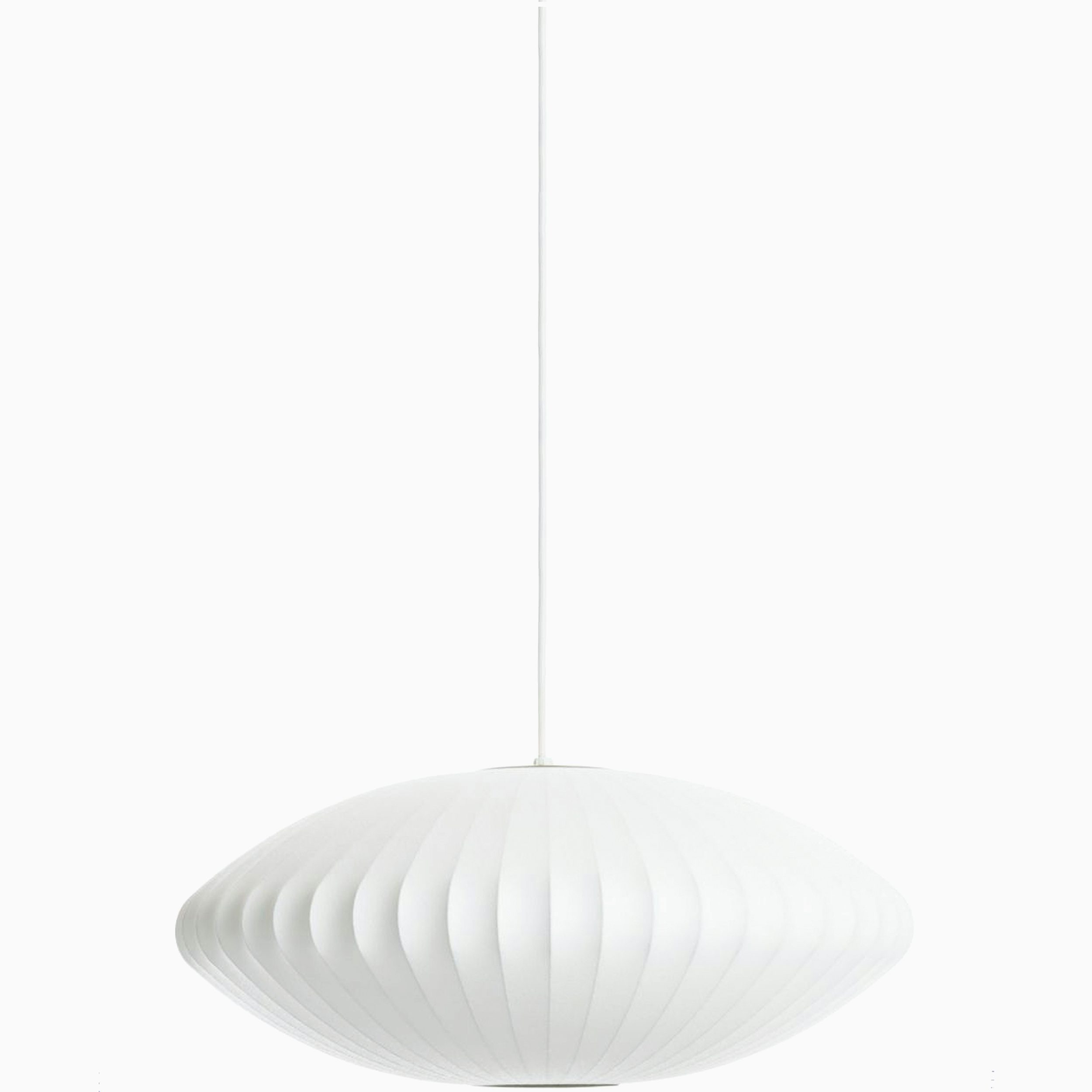
George Nelson designed the Bubble Lamps in 1952 around a steel skeleton sprayed with a translucent plastic polymer. The medium Saucer remains unusually legible: a simple floating form that diffuses light while allowing its internal structure to read through the skin.
The evidence sheet
What survives after illumination is solved?
A competent pendant can light a table for far less. The Nelson premium buys a licensed design, a distinctive diffusion method, historical continuity and an object that carries visual weight even when switched off.
Admire—and buy when the room needs the object
Admire. The Saucer is a strong design purchase and a weak purely functional one. It makes sense when architecture and atmosphere are part of the job; it is unnecessary if the requirement is simply good light.
The catch
At nearly $900 before installation, most of the incremental spend is design value. That is legitimate, but buyers should be explicit about it rather than pretending the fixture offers proportionally better illumination.
Independent perspective: Architectural Digest design history.
Pricing, dimensions, construction and warranty are Herman Miller-stated and may change. Row & Ledger has not physically evaluated light quality or installation.