Best Adjustable Dumbbells for Home Gyms
Adjustable dumbbells sell the same promise—an entire rack in one footprint—but they get there with very different mechanisms. The real trade is between durability, conventional dumbbell feel, weight ceiling and mechanical complexity.
The Row
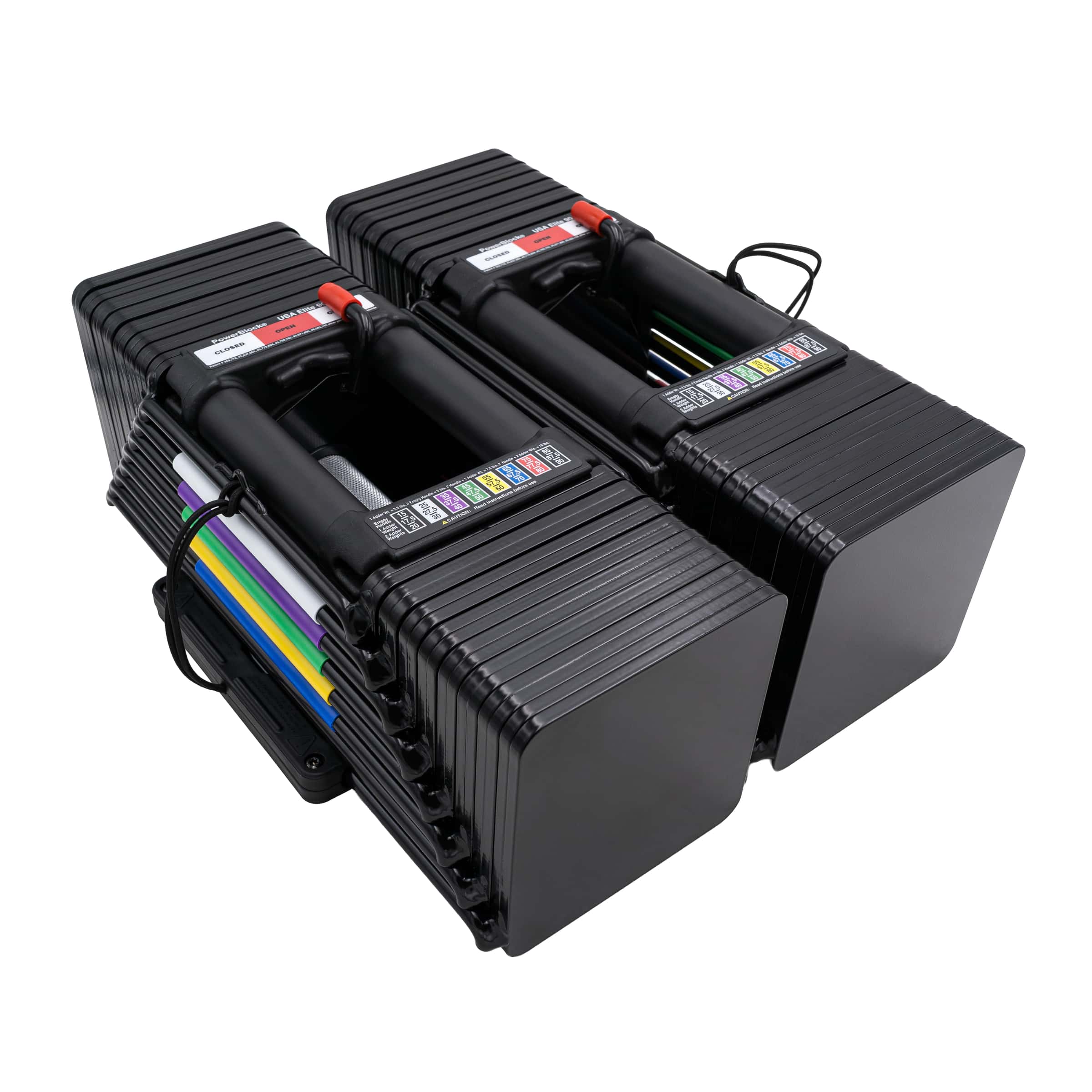
PowerBlock Elite USA 90
The strongest long-horizon architecture: 5–90 lb, 2.5/5-lb steps, welded steel plates and a compact nested stack.
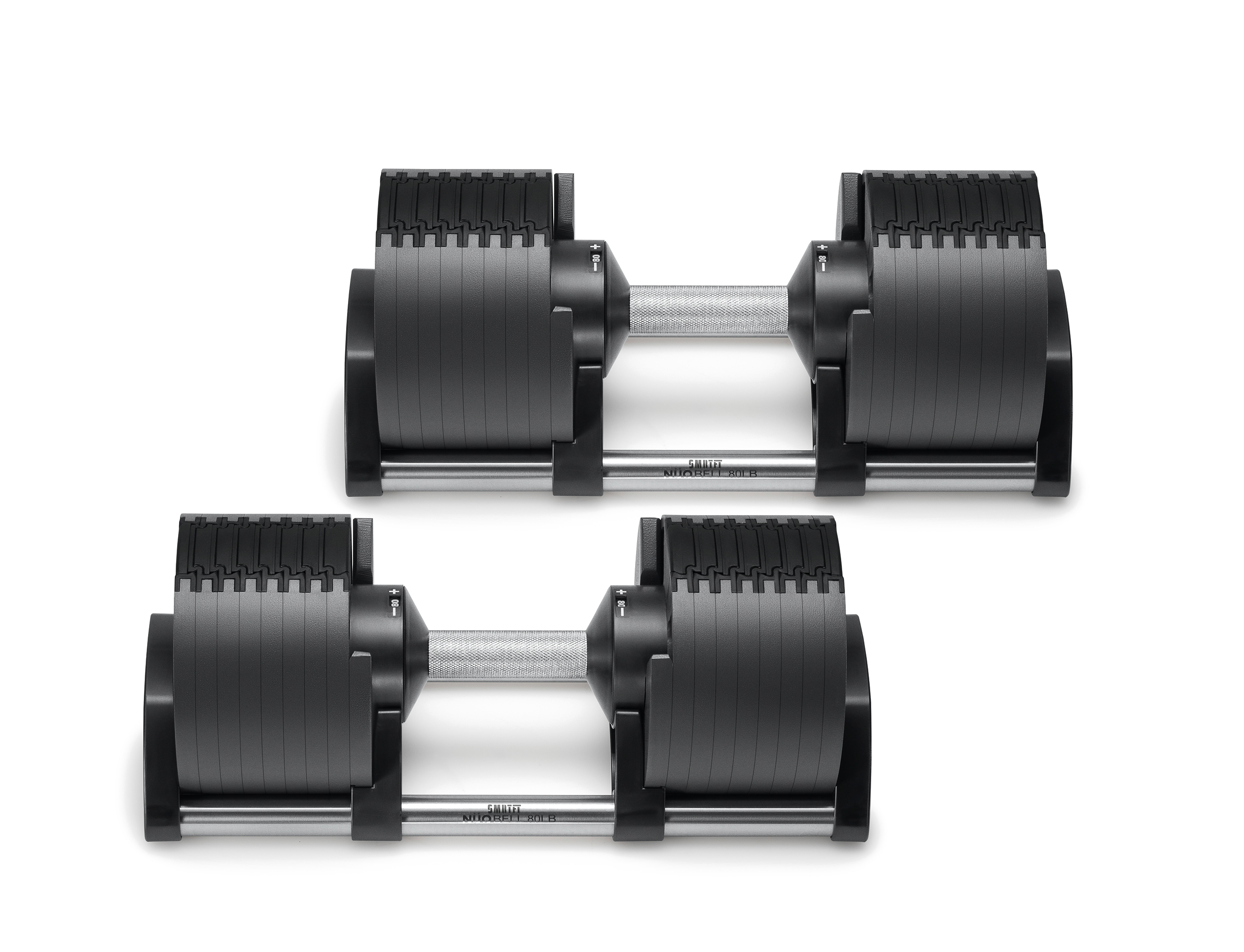
SMRTFT NÜOBELL 80
A one-second twist-lock system, 5–80 lb range and knurled steel handle make it feel closest to a normal dumbbell rack.
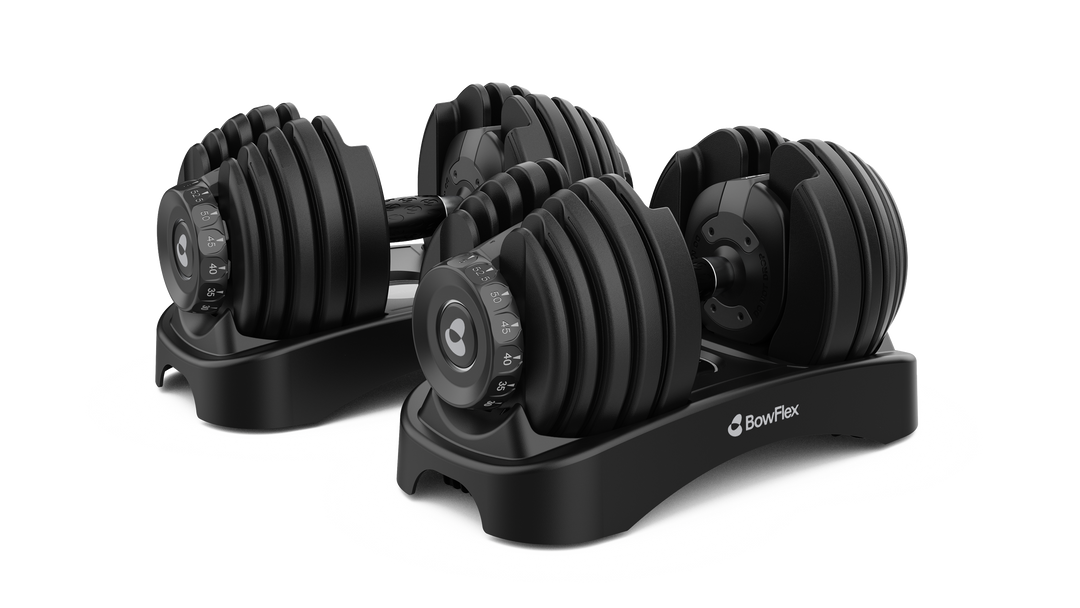
BowFlex SelectTech 552
Fifteen settings from 5–52.5 lb per dumbbell in a familiar dial-adjust format that covers a large percentage of general home workouts.
The evidence sheet
| Product | Range | Adjustment | Warranty | What the premium buys |
|---|---|---|---|---|
| PowerBlock Elite USA 90 | 5–90 lb | Selector pin + micro weights | 5 years | High ceiling, compact stack, steel construction, few moving parts |
| NÜOBELL 80 | 5–80 lb | 1-second twist-lock | 2 years standard | Conventional shape, knurled handle, fast changes, machined steel plates |
| BowFlex SelectTech 552 | 5–52.5 lb | Dial selection | 2 years parts | 15 settings, broad mainstream availability, compact footprint |
What should a more expensive adjustable dumbbell buy?
Not more electronics. The premium should buy a higher useful weight ceiling, faster selection, stronger materials or fewer fragile mechanisms. That is why PowerBlock remains the most defensible long-term system even though NÜOBELL feels more like a conventional dumbbell in hand.
The decision that actually matters
If 50 pounds per hand is enough, BowFlex solves the space problem cleanly. If you expect to progress into heavier presses and rows, buying a 52.5-pound ceiling can become false economy. NÜOBELL raises the ceiling to 80 pounds and improves conventional feel, but the twist-lock architecture is more mechanically involved. PowerBlock looks less traditional but is built around a simpler nested stack.
Who should buy what
- PowerBlock: serious home lifters who care about durability, compactness and future load progression.
- NÜOBELL: buyers who value traditional dumbbell geometry and very fast changes enough to accept a higher price.
- BowFlex: general fitness users whose exercises rarely exceed 50 pounds per hand.
Choose around progression, not the advertised maximum
Start with the lightest useful increment and the heaviest movement in the program. A high ceiling matters for rows, hinges and presses, but coarse jumps can make shoulder work and rehabilitation frustrating. The adjustment mechanism also needs to remain legible when tired: selectors, pins and nested plates solve the same problem with different tradeoffs in speed, noise and vulnerability.
Then price the whole station. Include the stand, expansion kits and the floor space needed to change weight safely. A cheaper pair that interrupts training or tops out early can become false economy; an elaborate system is equally wasteful if most sessions use three familiar settings. The disciplined choice fits the actual progression plan and leaves room to service or replace wear parts.
The catch
Drop tolerance, handle feel, plate rattle and change speed are experience-dependent. Adjustable systems also require more care than fixed iron; none should be treated as indestructible gym equipment.
PowerBlock Elite USA 90
It is the least conventional-looking option and the strongest ownership argument. The 90-pound ceiling, compact footprint and relatively simple mechanism make it the system least likely to be outgrown.
Evidence used
PowerBlock comparison
SMRTFT NÜOBELL 80
Row & Ledger: BowFlex SelectTech 552