Best Chef's Knives for Home Cooks
A chef's knife is a good test of whether premium pricing buys useful metallurgy and geometry—or mostly visual theater. We compared three very different 8-inch-class knives on weight, blade profile, hardness, construction and the maintenance burden that comes with each.
The Row
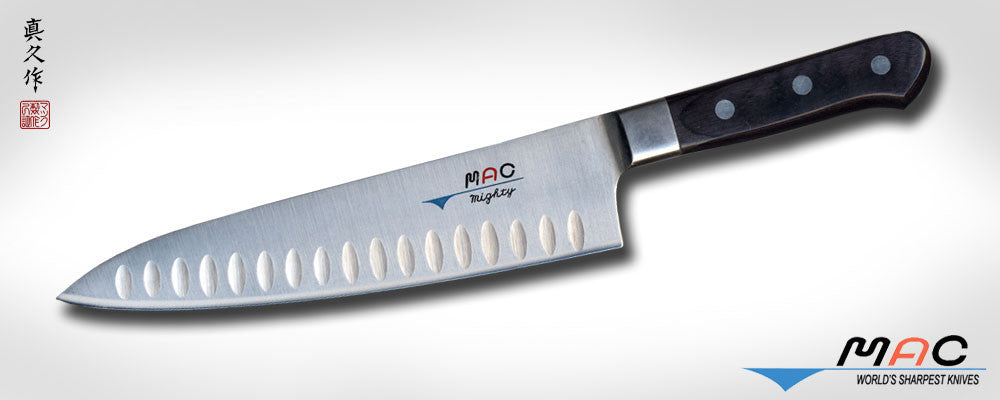
MAC Professional MTH-80
A thin 2.5mm blade, 6.5-ounce weight and 7.88-inch cutting edge make the strongest work-first case at $175.
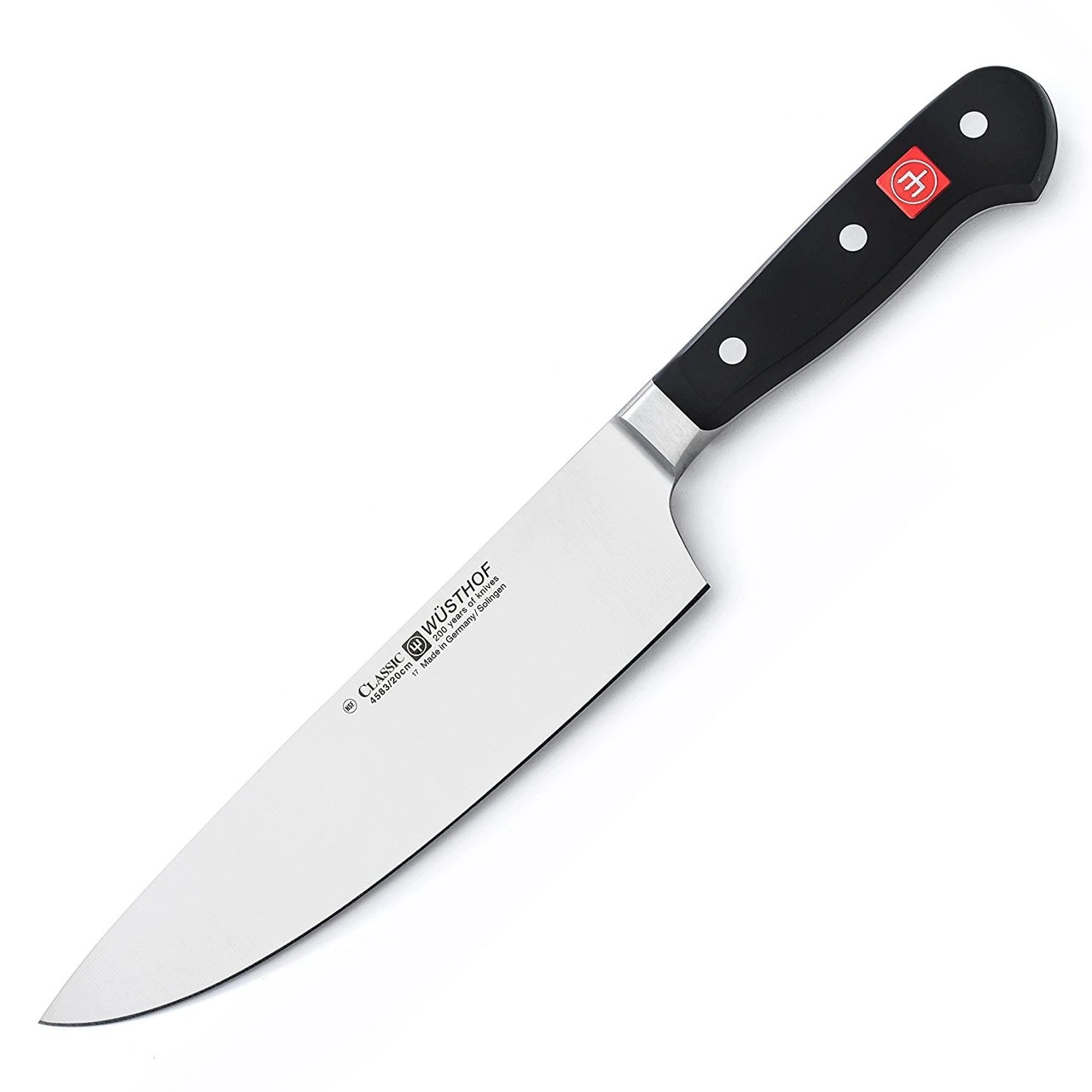
WÜSTHOF Classic 8"
Forged in Germany, 58 HRC and full-bolster construction for buyers who prefer more heft and traditional Western geometry.
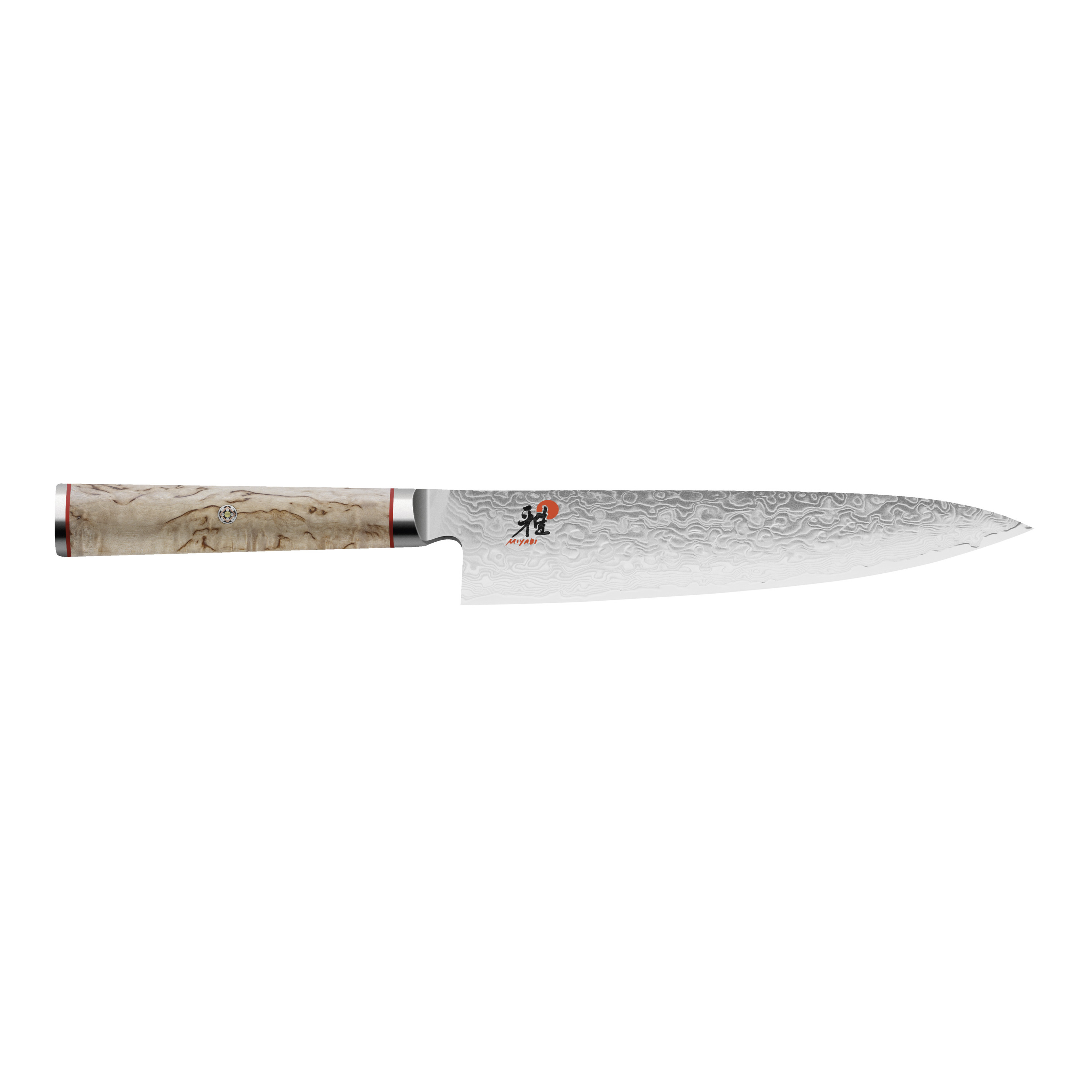
MIYABI Birchwood SG2
63 HRC SG2 powder steel, 101-layer Damascus and Karelian birch turn the knife itself into part of the object value.
The evidence sheet
| Product | Price | Blade / hardness | Weight | What the premium buys |
|---|---|---|---|---|
| MAC MTH-80 | $175 | 7.88" · 2.5mm thin blade | 6.5 oz | Low mass, thin geometry, dimpled blade, Japanese work-first design |
| WÜSTHOF Classic 8" | $170 | 8" · 58 HRC | Heavier forged profile | Forged German construction, full bolster, traditional durability and serviceability |
| MIYABI Birchwood SG2 | $364.99 | 7.87" · 63 HRC SG2 | 0.38 lb | Powder steel, thin Japanese edge, Damascus cladding, Karelian birch, hand finishing |
What should more money buy in a knife?
The defensible premium is geometry, edge retention, construction and serviceability. Decorative Damascus and exotic handle materials can be legitimate object value, but they do not automatically make dinner prep better. MIYABI's price is easiest to defend when craft matters alongside cutting performance; MAC is the cleaner tool-first answer.
The decision that actually matters
Knife preference is more personal than a spec table can resolve. MAC's lighter, thinner profile should appeal to cooks who value agility. WÜSTHOF's forged geometry and full bolster suit buyers who like a more substantial Western knife. MIYABI's harder steel can hold an edge longer but also asks for more careful use and sharpening.
Who should buy what
- MAC MTH-80: most serious home cooks who want performance without turning the knife into jewelry.
- WÜSTHOF Classic: buyers who want a traditional German forged knife and prefer more mass in hand.
- MIYABI Birchwood: buyers who knowingly value harder powder steel, Japanese finishing and object-level craftsmanship.
Choose geometry before prestige
The useful distinction is how the knife moves through food. A thinner edge and lighter blade reward precise slicing but tolerate less twisting and rough contact; a heavier German profile feels calmer through dense ingredients and often suits a rocking motion. Handle shape, balance and board clearance are personal enough that a short in-hand trial is more valuable than another paragraph about steel lineage.
Maintenance belongs in the buying decision. Harder steel can hold an acute edge longer, but sharpening skill, corrosion habits and the availability of competent service matter more than a small specification advantage. Buy the knife you will sharpen, dry and reach for. A famous blade left dull in a drawer is worse value than a modest one maintained properly.
The catch
Balance, handle comfort, food release and sharpening feel are hands-on variables. A knife that looks superior on paper can still be the wrong tool for your grip and cutting style.
MAC Professional MTH-80
The MAC wins because its premium is concentrated where a daily knife benefits most: thin geometry, low weight and a practical 8-inch-class format. It is the least interested in proving that it is expensive.