OMA K3 Turntable
Cast iron, a skeletal tonearm and the presence of a machine from a different century. Oswalds Mill Audio makes vinyl playback an architectural event.
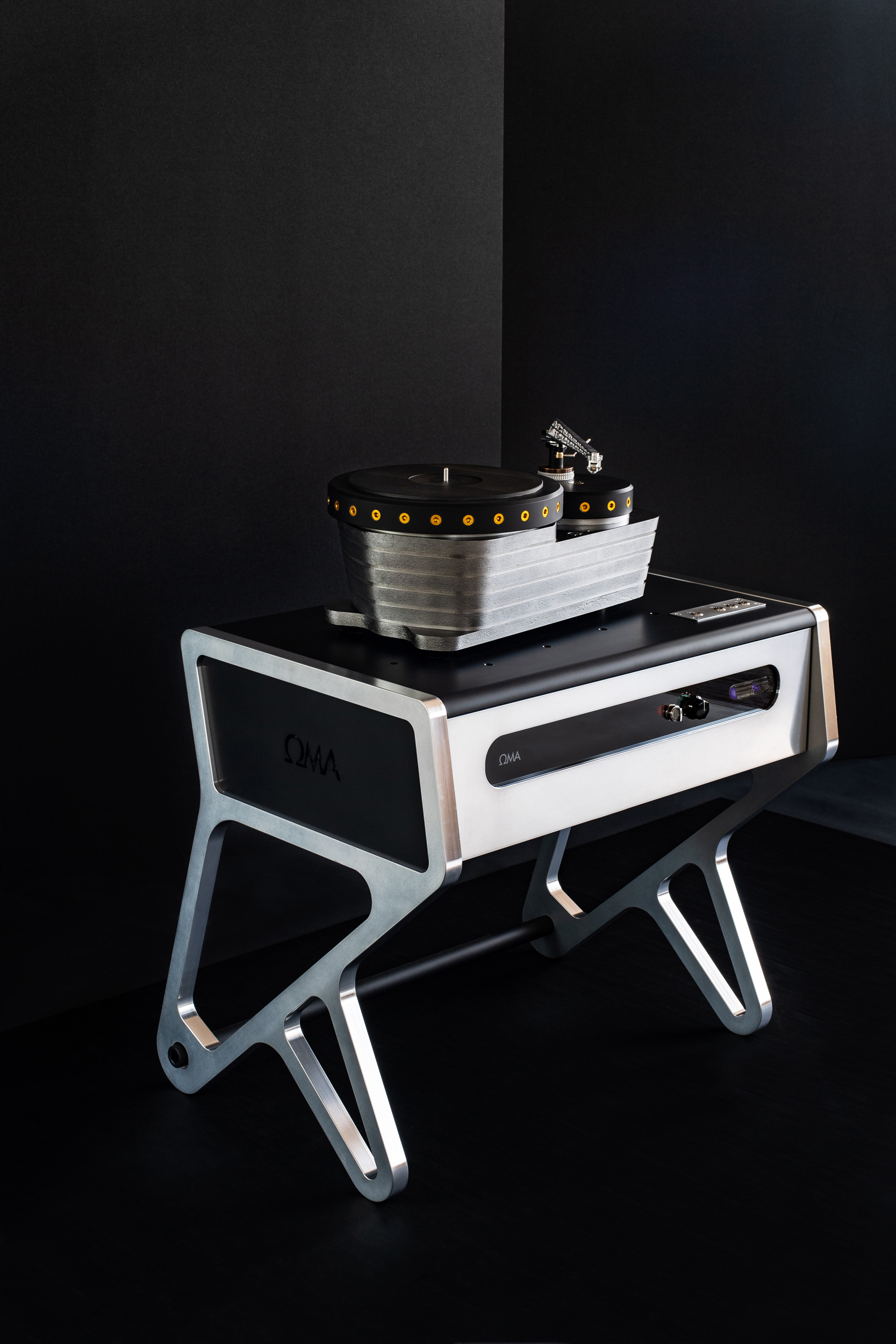
The tonearm looks like a tiny bridge. Beneath it, the platter sits above a body of ribbed cast iron punctuated by gold-coloured plugs. The K3 could have been designed for a workshop in which records are manufactured, rather than a room in which they are played.
That impression has a basis. Oswalds Mill Audio describes record-cutting lathes as an inspiration for the project. The result makes the act of playing a record conspicuous: a large machine attends to a small groove. Its appeal is partly the audacity of that proportion.
A six-figure analogue machine
Construction and configuration: OMA’s current K3 page. Price: The Absolute Sound, April 12, 2024, which listed $363,000 with the tonearm and $409,000 with the stand shown here. These are dated reference prices, not September 2026 quotations. Request current pricing and an exact list of included components from OMA.
The structure is the spectacle
OMA’s account of the engineering is more interesting than a claim that expensive materials must sound better. Its design paper describes ways to move and dissipate unwanted energy through the structure. The chassis uses filled internal chambers; Frank Schröder’s open metal tonearm turns a stiffness-and-mass problem into the most visually delicate part of the machine.
Those are design intentions and construction choices. They do not establish how much better the K3 sounds than a well-set-up conventional turntable. Row & Ledger has not listened to it, and a component count or unusual manufacturing process cannot replace that comparison.
The strongest buyer is an experienced vinyl collector who wants this particular mechanical and visual expression, has the rest of the playback system settled, and can arrange a serious audition. For that person, the shape is part of the appeal rather than packaging around it.
The Catch
A turntable is one part of a system. Confirm the cartridge, phono stage, power supply, support, installation and service arrangements included in a quotation. OMA offers different configurations, including a dedicated stand that houses power-supply components; a photograph of a complete installation is not an invoice.
There is also an attention cost. This is an object with enough visual force to organise a listening room around itself. If you want the equipment to recede while music plays, its spectacular engineering may be the wrong kind of presence.
A less expensive deck leaves a great deal of money for records, setup and the room. The burden is on the audition to explain why this machine deserves that money instead.
Admire first. Audition before anything else.
The K3 earns a place here because its industrial form is extraordinary and its engineering rationale is available to examine. It does not earn a blanket sonic recommendation from its price. Consider it as a collector’s playback instrument after a configuration-specific demonstration. For everyone else, it remains a fascinating example of how far one designer’s answer to a familiar problem can go.
Researched September 10, 2026. Row & Ledger has not physically tested this product. Official manufacturer photography. Historical and configuration-specific prices are identified above; current availability and delivered costs require confirmation. Product links are not affiliate-tracked.